Tag
24 articles
Foundation Future Industries, backed by Eric Trump, is reportedly developing military robotics capabilities, raising questions about the future of autonomous weapons systems.
NATO has signed a €200 million contract with Accenture and Leonardo to build a secure cloud backbone called the Protected Business Network.
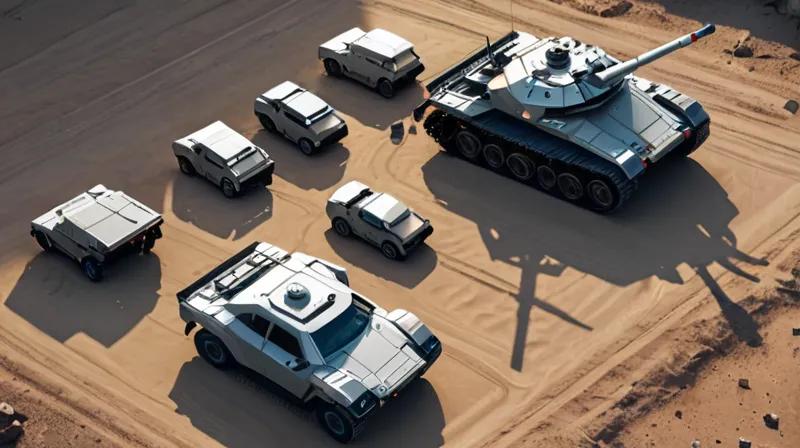
Forterra has deployed over 100 self-driving ATVs in Ukraine's conflict zones, marking a significant milestone in autonomous military technology. This deployment represents a major shift in how autonomous systems are being utilized in active combat operations.
Stark Defence, a Berlin-based drone startup, has raised €500 million in funding led by Sequoia Capital and Founders Fund, valuing the company at over €3.5 billion.
The Justice Department argues that the Pentagon should be allowed to continue using unpermitted gas turbines developed by xAI, citing national security concerns. The case highlights the tension between environmental regulations and military readiness.
Data from Pokémon Go players has helped train AI systems now being integrated into U.S. military drones, raising questions about privacy and data usage.
The StrictlyVC Los Angeles event on June 18 will explore the convergence of defense technology and AI, as venture capital investment in these sectors continues to grow.
Learn how to build a basic AI threat analysis system that demonstrates how AI can help military personnel make faster decisions in high-stakes situations, similar to what was discussed at the Shangri-La Dialogue.
Picogrid has raised $45 million to develop an integration platform that helps modern defense systems communicate across diverse hardware and protocols.
This article explains the AI and tech concepts behind Anduril Industries' $5 billion funding round and its $61 billion valuation, focusing on AI-driven defense systems, machine learning applications, and the role of government contracts in tech valuation.
True Anomaly has raised $650 million in Series D funding, valuing the company at $2.2 billion as it develops autonomous spacecraft for orbital combat.
The EU imposed its largest round of sanctions on Chinese entities in two years, targeting firms linked to Russia. China retaliated by warning of consequences for Europe's defense capabilities.